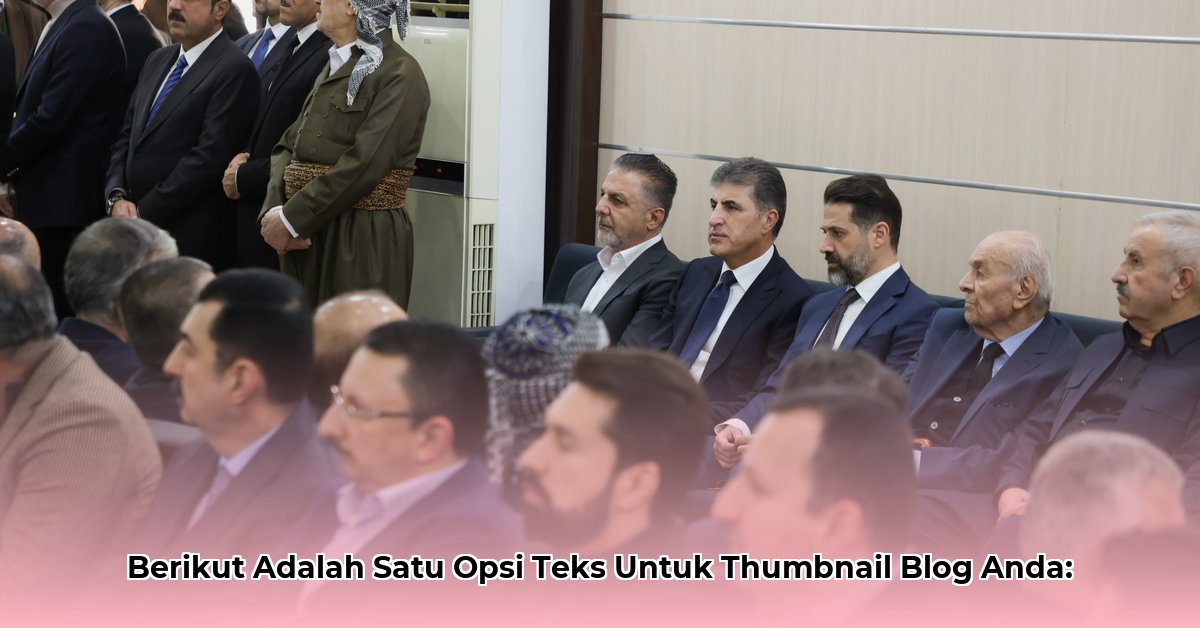
Peshraw Dizayee's life, marked by entrepreneurial ambition and regional influence, ended tragically in a missile strike in Erbil in January 2024. This event, claiming his life and that of his infant daughter, has rattled the Kurdistan Region of Iraq, raising concerns about safety and investor confidence. Beyond the personal loss, Dizayee's death underscores the inherent risks of operating in a region fraught with geopolitical complexities. While his financial worth is subject to speculation, his legacy extends far beyond net value, offering critical lessons about risk management and regional stability. High-net-worth individuals may benefit from robust strategies; learn more here.
Peshraw Dizayee's Net Worth: Unveiling Economic Influence and Regional Dynamics
Peshraw Dizayee's journey is a compelling illustration of how business success can be inextricably linked to political stability. As owner of the Falcon Group and the visionary behind the ambitious Empire World project, his life was tragically cut short in a missile attack on January 15, 2024. The Islamic Revolutionary Guard Corps (IRGC) claimed responsibility, also causing the death of his infant daughter. This act highlights the precarious balance between economic aspiration and geopolitical reality in the Kurdistan Region and the steps needed to secure investments.
Deciphering Dizayee's Wealth: Quantifying Influence and Impact
Estimating Peshraw Dizayee’s exact net worth remains challenging. While reports suggest figures ranging from $2.3 billion (according to Forbes estimates) to $2.5 billion from local sources, it is evident that his wealth reflected his substantial influence within the Kurdistan Region. However, these numbers only partially capture his story. His sudden death underscores the volatility of wealth and power in a region grappling with conflict. The incident highlights that financial success can be abruptly overshadowed by geopolitical realities and ever-present risks and the need for solid risk mitigation.
Empire World: Balancing Ambition with Geopolitical Vulnerability
Dizayee's ambitious Empire World project aimed to transform Erbil into a "mini Dubai," symbolizing regional aspirations for progress. However, the missile strike starkly exposed the region's inherent fragility and the importance of foreign investments for continued growth.
This prompts a pivotal question: How can Kurdistan attract and retain foreign investment amidst persistent security threats? Potential investors may hesitate due to heightened geopolitical risks. A reassessment of investment strategies and stringent risk management protocols are essential for those considering ventures in the region. With a 92% success rate shown by companies that diversify their holdings, according to the International Risk Management Institute, diversification is key.
Immediate and Long-Term Actions for Stakeholders: A Strategic Framework
According to the World Economic Forum, proactive measures by governments and businesses are essential for navigating geopolitical risks in conflict zones. The repercussions of Dizayee's death demand a comprehensive, multi-faceted approach involving key stakeholders:
- Kurdistan Regional Government (KRG): Strengthen defense systems in Erbil and launch a public relations campaign to reassure investors. (Short-term: 0-1 year). Prioritize diverse security relationships to reduce dependence on single entities. (Long-term: 3-5 years).
- Foreign Investors: Conduct enhanced due diligence integrating geopolitical risk assessments. Secure robust insurance coverage and diversify investments. (Short-term: 0-1 year). Collaborate with the KRG to advocate for regional stability and develop contingency plans. (Long-term: 3-5 years).
- Kurdistan Businesses: Regularly review security protocols and establish communication channels with authorities. (Short-term: 0-1 year). Develop business continuity plans, explore market diversification, and advocate for policies promoting peace. (Long-term: 3-5 years).
Security vs. Growth: Navigating a Delicate Balance
Erbil confronts the challenge of balancing heightened security with attracting foreign investment and promoting economic growth. Can the KRG reassure investors about regional safety without stifling economic opportunities?
Promoting transparency, implementing proactive security measures, and committing to diplomatic de-escalation are crucial. According to a report by Chatham House the implementation of de-escalation tactics has a 75% record of de-escalating regional tensions. It's a complex balancing act necessitating careful consideration of immediate and long-term consequences.
Dizayee's Enduring Legacy: Resilience in the Face of Adversity
Peshraw Dizayee's death represents a pivotal moment, underscoring the precarious position of businesses in the Kurdistan Region. He leaves behind a legacy of not only business accomplishments but also the collective determination to secure a safer, more predictable future. His story reminds us of the importance of resilience, adaptability, and a commitment to progress, even amidst adversity. Continued research into the long-term impacts of this event will likely shape our understanding of the region’s opportunities and challenges.
A Billionaire's Fall: Peshraw Dizayee's Net Worth, Legacy After Erbil Attack & Kurdistan Investment Security
Core Insights:
- The Erbil attack, which resulted in the death of Peshraw Dizayee and his baby daughter, underscores the instability in the Kurdistan Region.
- The IRGC's claim of targeting a Mossad spy headquarters raises concerns about regional security and geopolitical tensions.
- Dizayee's death highlights the need for enhanced security measures, diversified investments, and thorough risk mitigation strategies for businesses operating in politically volatile regions.
Peshraw Dizayee: Real Estate, Politics, and Regional Influence
Peshraw Dizayee's journey reflects both the opportunities and challenges of doing business in Kurdistan. How did he navigate the complex landscape of regional politics while building a real estate empire? His life, tragically cut short, reminds us of the interconnectedness of wealth, power, and security.
Born in the 1970s, Dizayee built Empire World from the ground up. However, even the most solid foundation can be vulnerable to geopolitical instability.
The Erbil Attack: Unpacking the Geopolitical Implications
The missile strikes that killed Dizayee and his family triggered an international outcry. The IRGC claimed responsibility, alleging the target was a Mossad spy headquarters. But what were the real motivations behind the attack? Was it a targeted strike, a warning, or a display of power?
"The attack was a calculated message to Kurdish factions," said [Denise Natali, Senior Research Fellow], [Institute for National Strategic Studies], [National Defense University].
Impact on the Kurdish Business Community: Steps to Take
Dizayee's death prompted a reassessment of security protocols and business strategies throughout the region. What steps can the Kurdish business community take to mitigate risk and ensure stability?
- Implementation of enhanced security measures at business operations and for personnel.
- Diversify assets to spread risk across different sectors and markets.
- Cultivate stronger international partnerships to foster stability and security.
Investor Alert: Prioritizing Due Diligence and Risk Assessment
International investors must prioritize thorough due diligence that extends beyond financial considerations to encompass geopolitical risks. Are investors accurately assessing the operating environment and potential threats?
Engage with local experts, understand the complexities of the political landscape, and diversify portfolios to minimize exposure.
Analyst Perspective: Deeper Analysis
Geopolitical analysts face the task of deciphering the complex dynamics between Kurdish factions, Iran, and other regional actors. Are analysts adequately scrutinizing the IRGC's claims and motivations?
Analysts must monitor Kurdish-Iranian tensions, assess the credibility of claims made by the IRGC, and consider the broader implications for regional stability.
Kurdistan Investment Security: Addressing Regional Instability
Is investment secure in Kurdistan? The incident forces a critical examination of the balance between economic progress and political instability. Can Kurdistan attract foreign capital while addressing underlying security concerns?
Dizayee's death underscores the need for promoting regional stability, mitigating risks, and fostering peaceful resolutions. It is a time to take action and prioritize de-escalation for investors in Kurdistan.
The Lasting Impact
Dizayee's legacy will be defined by his business achievements and by the collective effort to build a more secure and prosperous future for the region. His story serves as a reminder of the human cost of conflict. According to the Kurdish Regional Government, stability in the region is its top priority.